
Midnight Sentinel
A great horned owl’s winter vigil at Pines & Quill—where silence, starlight, and wisdom converge

In the Sean McPherson novels, the great horned owl appears only once per book. Limiting him to a single scene keeps his presence special—something readers look forward to discovering. But here, outside the confines of fiction, I’d like to share more of his personality, his watchfulness, and the quiet wisdom he embodies.
The acreage at Pines & Quill is alive with birds, but none as commanding as the great horned owl. Larger than a barn cat, with yellow eyes that gleam even in fading light, he’s lived six winters in these woods. His favorite branch, worn smooth by talons, offers a sweeping view of ferns, brambles, and the soft duff below.
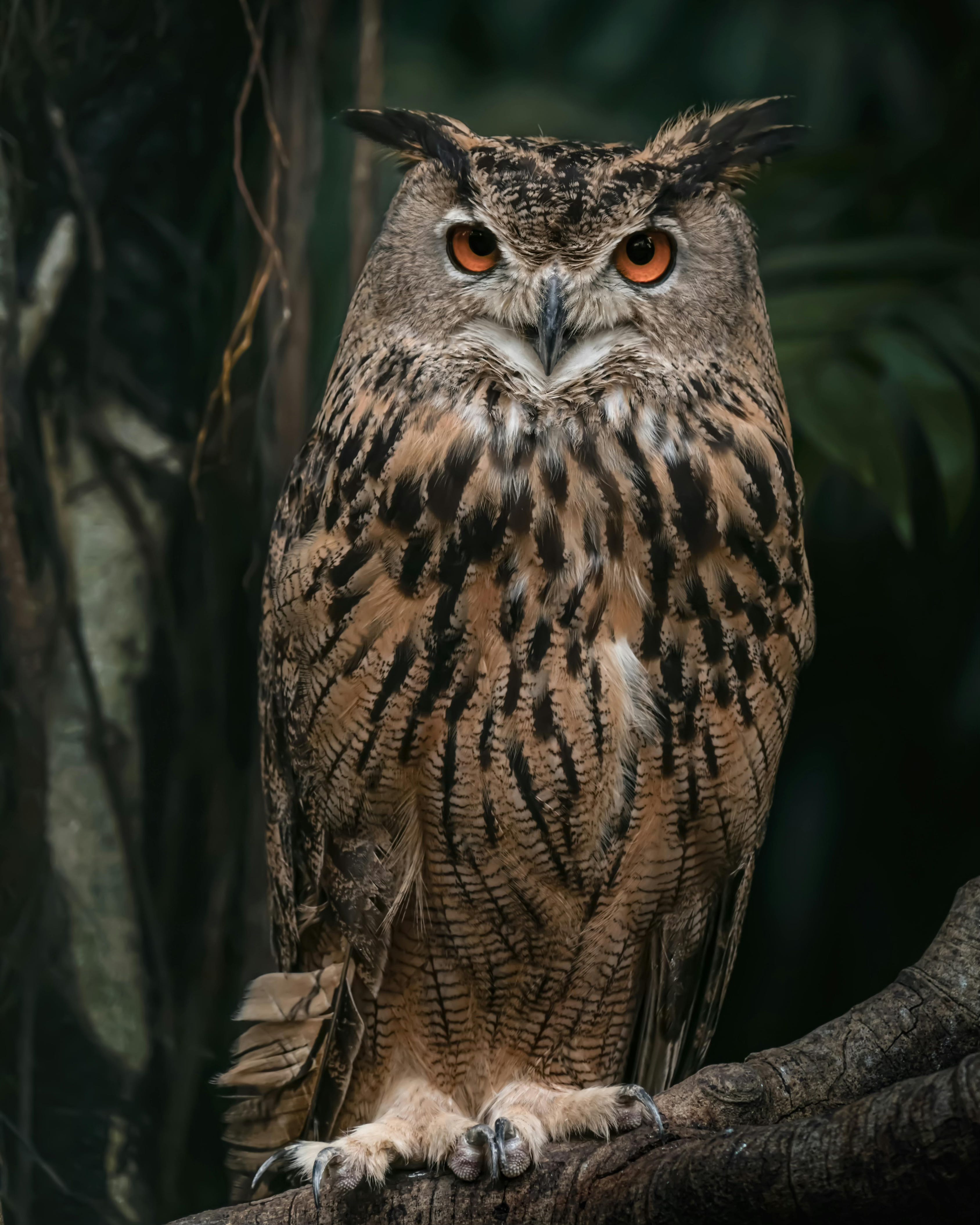
From this perch, he’s hunted on summer mornings, preened in spring rains, and watched snow gather on winter nights. In autumn, he’s called to his mate and gathered soft grasses for their nest. Tonight, his belly is full, his body warm, and he simply watches as twilight deepens.
The forest settles into its nocturnal rhythm. A doe folds herself into the duff, breath rising in faint clouds. Band‑tailed pigeons coo softly as they tuck into branches. A jay’s raucous call fades, wood rats retreat into stick houses, and a vole curls beneath leaf litter. Even a bobcat pauses to groom before slipping back into shadow.
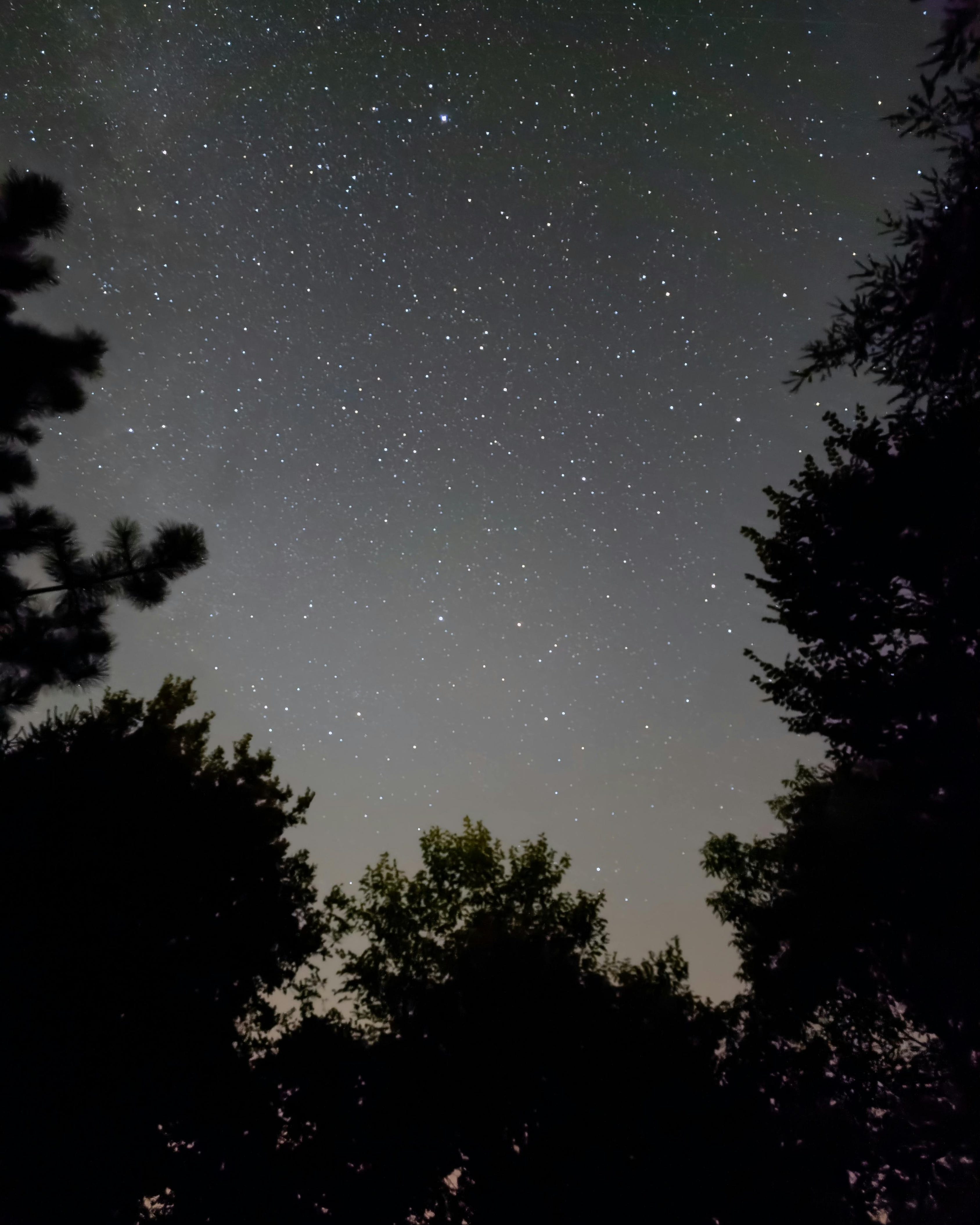
The owl notices everything—the way moonlight turns trees into silver sculptures, frost catches starlight, silence grows full rather than empty. Stars emerge, familiar companions wheeling across the sky. He has oriented himself by them countless times, hunting in the darkest hours before dawn.
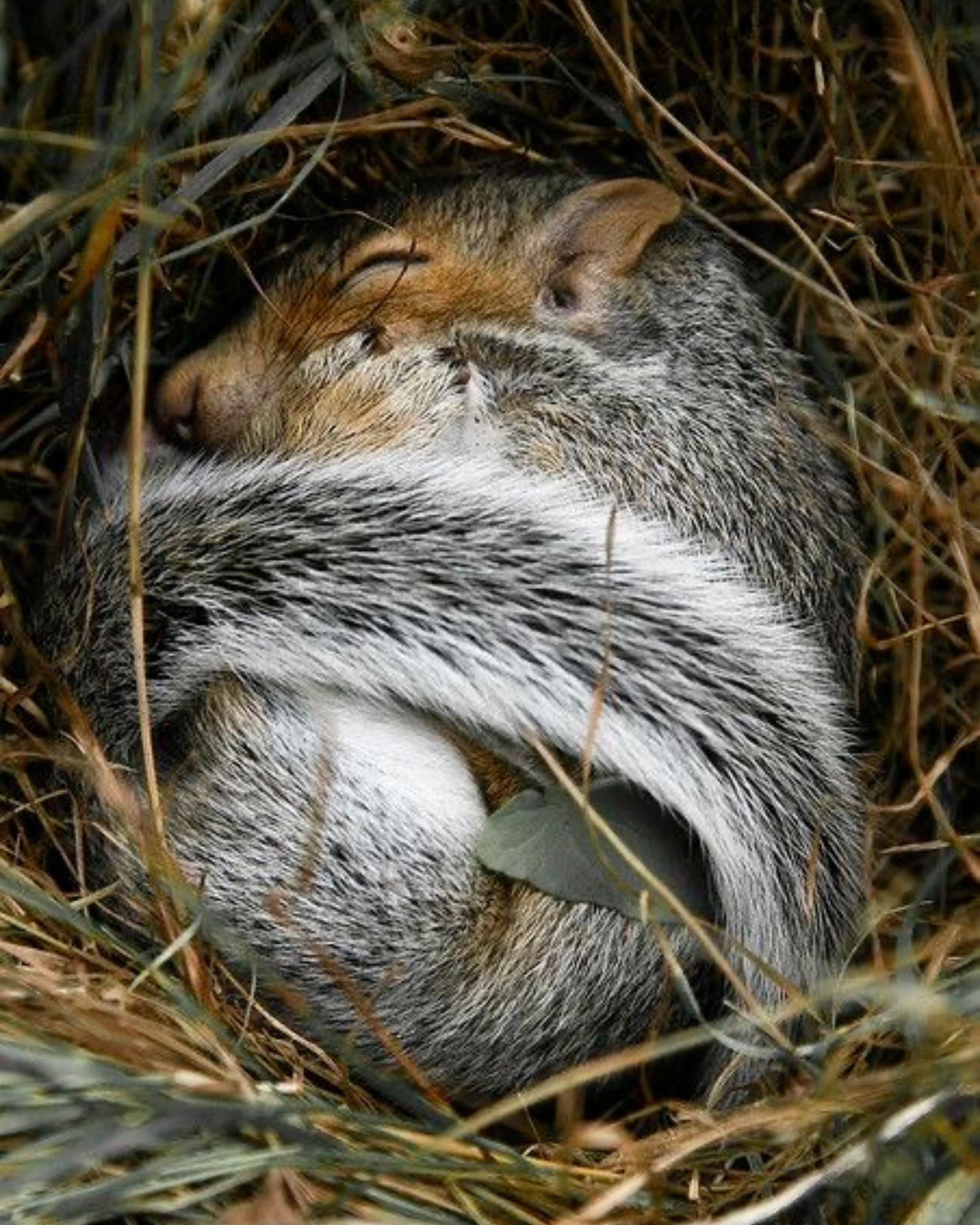
A gray squirrel makes final adjustments to its nest high in a Douglas fir to the northeast. The owl observes as it pulls leaves into place, creating a warm pocket in the fork of two branches. The squirrel circles several times, testing, rearranging, and finally curls into a tight ball. Its bushy tail wraps around its body like a blanket.
A bat flits past, erratic in the cold. A coyote crosses the clearing, nose to the ground, eyes flashing yellow‑green when they meet his gaze. For a moment, predator and predator regard one another, then the coyote vanishes into manzanita.
Midnight approaches. Frost crystals form delicate fernlike patterns beneath the owl’s talons. His breath rises in visible clouds, steady as the stars. The forest holds its breath, the stillpoint of night. Everything rests—the doe, the pigeons, the squirrel, the woodrats, the vole. The owl softens, feathers fluffing against the cold, releasing tension.
He’s learned something over his years, though he can’t name it: the art of presence without action, of watching with soft eyes, of witnessing rather than striving.
Midnight passes. Stars begin their slow descent. The owl feels the shift—the deepest point of darkness reached, followed by the patient turning back toward light. There’s no urgency. Dawn will come in its own time, as it always does.
His eyes close halfway, then more. He settles into the state between waking and sleep, alert enough to stir if needed, yet resting deeply enough to restore. The pine tree holds him, its bark rough and solid beneath his talons. The darkness holds him too—complete, gentle, eternal.
For now, there’s only the owl in his favorite tree, the stars wheeling overhead, the forest breathing its slow winter breath, and the night enfolding everything.
Spring is in sight. Here’s wishing you a warm and cozy end to winter.
Laurie
lauriebuchanan.com
Laurie, What a beautiful quiet scene, alive yet peaceful with a promise of more to come.
Lovely, Laurie. Wishing you a cozy end to winter too.